


Gandhi and Tolstoy
Count Leo Nikolayevich Tolstoy (1828-1910)
and Mohandas Karamchand (Mahatma) Gandhi (1869-1948)
were both well known vegetarians, what is generally less well known is
the influence that Tolstoy had on the young Gandhi, including the direct
communications between them.
The first recorded reference was in 1890, the 20 year old Gandhi was a law student in London when he crossed the channel to visit the great Paris exhibition. In his autobiography (written in 1925) Gandhi recalls:
I had heard of a vegetarian restaurant in Paris. So I engaged a room there and stayed seven days ... I must say a word about the Eiffel Tower. I do not know what purpose it serves today. But I then heard it greatly disparaged as well as praised. I remember that Tolstoy was chief among those who disparaged it. He said that the Eiffel Tower was a monument of man's folly, not of his wisdom.Tobacco he argued was the worst of all intoxicants, inasmuch as a man addicted to it was tempted to commit crimes which a drunkard never dared to do; liquor made a man mad, but tobacco clouded his intellect and made him build castles in the air. The Eiffel Tower was one of the creations of a man under such influence.
Gandhi returned to India in 1891, then went to South Africa, he mentions Tolstoy again during 1894-95:
I made too an intensive study of Tolstoy's books. The Gospels in Brief , What to do? and other books made a deep impression on me. I began to realise more and more the infinite possibilities of universal love.
In 1903 Gandhi was in a vegetarian restaurant in Johannesburg when he met a younger man, Henry S.Polak who had been born in Dover in 1882 and had apparently become vegetarian as a result of reading Tolstoy. The pair found they had much in common, became close friends and Polak became one of the first residents on Phoenix Farm, the first such establishment created by Gandhi.
During the struggles with the South African government over the next few years Gandhi was imprisoned several times. He did a lot of reading whilst imprisoned and mentions reading Tolstoy, particularly in 1908 when he was held from January 11 to January 30.
At the beginning of 1909 he was in prison again and wrote, at length on March 25, to his son at Phoenix Farm. He included the following advice for a student who was on the farm at the time:
He should also try to read Tolstoy's Kingdom of God is Within You. It is a most logical book. The English of the translation is very simple. What is more Tolstoy practises what he preaches.
In 'The Life of Mahatma Gandhi' (1950) Louis Fischer devotes an entire chapter to Tolstoy and Gandhi, much of it filling in the background about Tolstoy (several articles from various sources can be found by following the link). This was leading up to letters of 1909/10 between Tolstoy aged 81/82, and Gandhi aged 40/41. Some brief extracts from Fischer follow (to buy a recent edition of the book in the UK see below):
... Gandhi's first personal contact with Tolstoy was in the form of a long letter, written in English, dated 'Westminster Palace Hotel, 4 Victoria Street, SW London, 1 October 1909', and sent from there to Tolstoy at Yasnaya Polyana, in central Russia. In it he acquainted the Russian novelist with the civil disobedience movement in the Transvaal.
In Tolstoy's diary entry for 24 September, 1909 (the Russian calendar was then thirteen days behind the Western calendar), he wrote, 'Received a pleasant letter from a Hindu of the Transvaal.' Four days later, Tolstoy wrote a letter to Vladimir G. Chertkov, his intimate friend and, later, the editor of his collected works saying, The letter of the Transvaal Hindu has touched me.'
Dating his letter from Yasnaya Polyana, 7 October (20th) 1909, Tolstoy wrote a reply to Gandhi in Russian. The Russian text was translated into English by Tolstoy's daughter Tatiana, who sent it to Gandhi. Tolstoy wrote, 'I have received your most interesting letter, which has given me great pleasure. God help our dear brothers and co-workers in the Transvaal. The same struggle of the soft against the harsh, of meekness and love against pride and violence, is making itself felt every year more and more among us here ... I greet you fraternally and am happy to have contact with you. (signed) Tolstoy.'
Gandhi's second letter to Tolstoy was written in Johannesburg on 4 April 1910, and was accompanied by a copy of Gandhi's little book, Hind Swaraj or Indian Home Rule. In the letter Gandhi said, 'As a humble follower of yours. I send you herewith a booklet which I have written. It is my own [English] translation of a Gujarati writing ... I am most anxious not to worry you, but if your health permits it, and if you could find the time to go through the booklet, needless to say I shall value highly your criticism of the writing.'
On 19 April, 1910, Tolstoy wrote as follows in his diary: 'This morning two Japanese arrived. Wild men in ecstasy over European civilisation. On the other hand the book and the letter of the Hindu reveal an undestanding of all the shortcomings of European civilisation and even of its total inadequacy.'
Next day there was another entry in Tolstoy's diary: 'Yesterday I read Gandhi on civilisation. Very good.' And again the next day: 'read a book about Gandhi. Very important. I must write to him.' The book about Gandhi was the Biography of Gandhi by J.J.Doke, which Gandhi had sent to Tolstoy.
A day later, Tolstoy wrote a letter to his friend Chertkov in which he referred to Gandhi as 'a person very close to us, to me'.
Tolstoy replied to Gandhi on 25 April (8 May), 1910 from Yasnaya Polyana. He wrote:
Dear Friend: I just received your letter and your book, Indian Home Rule. I read your book with great interest because of the things and questions you treat in it: passive resistance is a question of the greatest importance, not only for India, but for the whole of humanity.
I cannot find your former letter, but came across your biography by J.Doss [this is a mistake made by Tolstoy] which too interested me much and gace me the possibility to know and understand your letter. I am not quite well at present and therefore abstain from writing to you all what I have to say about your book and all your work, which I appreciate very much, but I will do as soon as I will feel better. Your friend and brother, L.Tolstoy.
This was the English translation sent to Gandhi, of Tolstoy's perfect Russian.
[from a later chapter by Fischer:
Herman Kallenbach bought 1,100 acres of land at Lawley, twenty-one miles outside Johannesburg and, on 30 May, 1910, gave it to the Satyagrahis free of any rent or charge. Here religion was wed to politics. Gandhi called it Tolstoy Farm.
Gandhi was the general manager ... Residents could have meat if they wished but, after a little propaganda from the general manager, none ever asked for it. ]Gandhi's third letter to Tolstoy is dated '21-24 Court Chambers, corner Rissik and Anderson Streets, Johannesburg, 15 August 1910'. In it Gandhi acknowledged Tolstoy's letter of 8 May, with thanks and added: 'I shall look forward to your detailed criticism of my work which you have been so good as to promise in your letter.' Gandhi also informed Tolstoy of the establishment of Tolstoy Farm by Kallenbach and himself. The letters of Gandhi and Kallenbach, accompanied by several issues of Gandhi's weekly, Indian Opinion, heightened Tolstoy's interest in Gandhi.In his diary of 6 September (19th), 1910, Tolstoy wrote, 'Pleasant news from the Transvaal about the passive resistance colony.' Tolstoy was at this time in a state of serious spiritual depression and physically ill. Nevertheless he replied to Gandhi's letter on the same day he received it. Tolstoy dictated the letter on the evenings of the 5th and 6th of September (18th and 19th). On the 7th (20th), Tolstoy corrected the letter and sent it in Russian to Chertkov for English translation.
It was Chertkov who posted Tolstoy's letter to Gandhi. Chertkov included in the letter a letter of his own in which he said:
My friend, Leo Tolstoy, has requested me to acknowledge the receipt of your letter to him of 15 August and to translate into English his letter to you of 7 September (new style - 20 September) written originally in Russian.
All you communicate about Mr Kallenbach has greatly interested Tolstoy, who has asked me to answer for him Mr Kallenbach's letter. Tolstoy sends you and your co-workers heartiest greetings and warmest wishes for the success of your work, his appreciation of which you will gather from the enclosed translation of his letter to you. I must apologize for my mistakes in English in the translation, but living in the country in Russia, I am unable to profit by the assistance of any Englishman for correcting my mistakes.
With Tolstoy's permission his letter to you will be published in a small periodical printed by some friends of ours in London. A copy of the magazine with the letter shall be forwarded to you, as also some English publications of Tolstoy's writings issued by 'The Free Age Press'.
As it seems to me most desirable that more should be known in English about your movement, I am writing to a great friend of mine and Tolstoy, Mrs Mayo, of Glasgow, proposing that she should enter into commnication with you ...
Chertkov sent a separate letter to Mr Kallenbach.
Tolstoy's own letter to Gandhi was the longest in the whole correspondence. Dated 7 September (20th), 1910, and translated into English by Chertkov, it was sent to an intermediary in England for posting to Gandhi. The intermediary was ill at the time and only posted the letter on 1 November, so that Gandhi received the letter in the Transvaal several days after the death of Count Leo Tolstoy.
Another source quotes Tolstoy as praising Indian Home Rule for 'its philosophy'. Gandhi's autobiography also recalls his time at Tolstoy Farm:
It was during this time that we had the discussions about milk. Mr Kallenbach said, 'We constantly talk about the harmful effects of milk. Why then do we not give it up? It is certainly not necessary.' I was agreeably surprised at the suggestion, which I warmly welcomed, and both of us pledged to abjure milk there and then. This was at Tolstoy Farm in the year 1912 ... We were all vegetarians on Tolstoy Farm, thanks I must gratefully confess to the readiness of all to respect my feelings.
In early 1913, in response to General Smuts refusing to lift 3 pounds tax on serfs, Gandhi closed Tolstoy Farm. The Gandhi family and several others moved back to Phoenix Farm. The adults prepared to go to prison.
In 1931 Gandhi returned from London to India but stopped for five day in Switzerland with the author Romain Rolland. In 1924 Rolland had written:
'With Gandhi everything is nature - modest, simple, pure - while all his struggles are hallowed by religious serenity, whereas with Tolstoy everything is proud revolt against pride, hatred against hatred, passion against passion. Everything in Tolstoy is violence, even his doctrine of non-violence.
There were similar comments from an Indian author, Tagore:
'He [Gandhi] condemns sexual life as inconsistent with the moral progress of man and has a horror of sex as great as that of the author of The Kreutzer Sonata, but unlike Tolstoy, he betrays no abhorence of sex that tempts his kind. In fact his tenderness for woman is one of the noblest and most consistent traits of his character and he counts among the women of his country some of his best and truest comrades in the great movement he is leading.'
References:
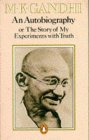 An Autobiography or The
Story of My Experiments with Truth, M.K.Gandhi (1925), Penguin Books -
buy this book from
(Editions from other publishers in the USA from )
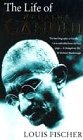 The Life of Mahatma Gandhi,
Louis Fischer (1950), HarperCollins Publishers. - buy this book from
- Hits: 1391